Three Painter Protocol

The protocol

Three painters, Jesse Ash, Rebecca Fortnum, Seungjo Jeong, circulated paintings between their studios. Taking another’s existing painting as a reference, each painter made a response; the reference was then passed on to the third painter, who responded in turn.

Through phases 1 and 2 each response was made in the presence of the physical painting rather than from a photographic reproduction: the painting travelled to the responding painter’s studio and remained there for the duration of the phase.

Before the final phase the three references and the six responses were brought together at one studio, so the painters could see them side by side and share each other’s work in progress.

Phase 3 turned the process back on itself. Jesse and Rebecca responded to the exchange as a whole; Seungjo responded to a painting made in response to his own. Twelve paintings result: three reference works, six responses and three made in the final phase.

The paintings

Jesse Ash
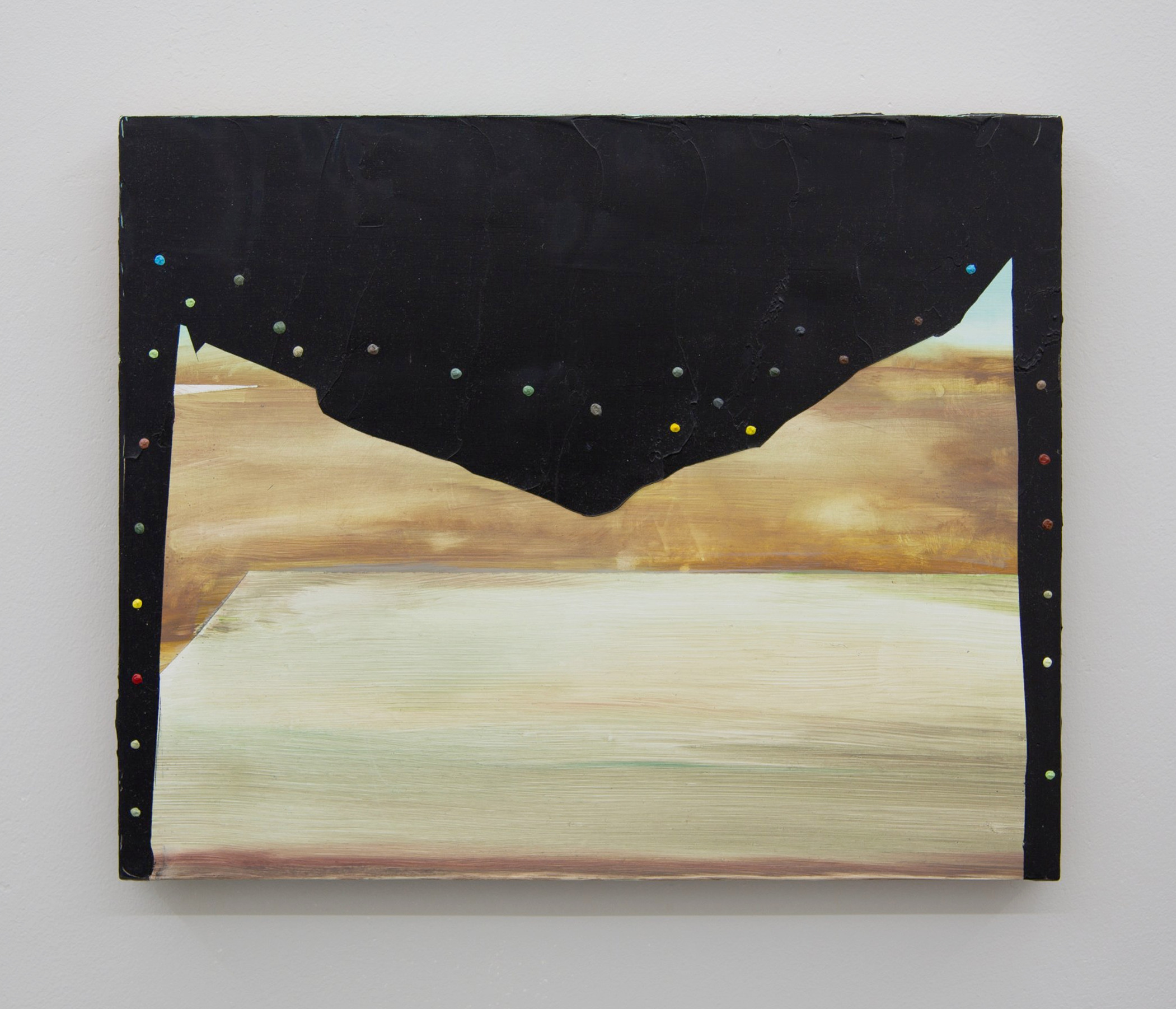
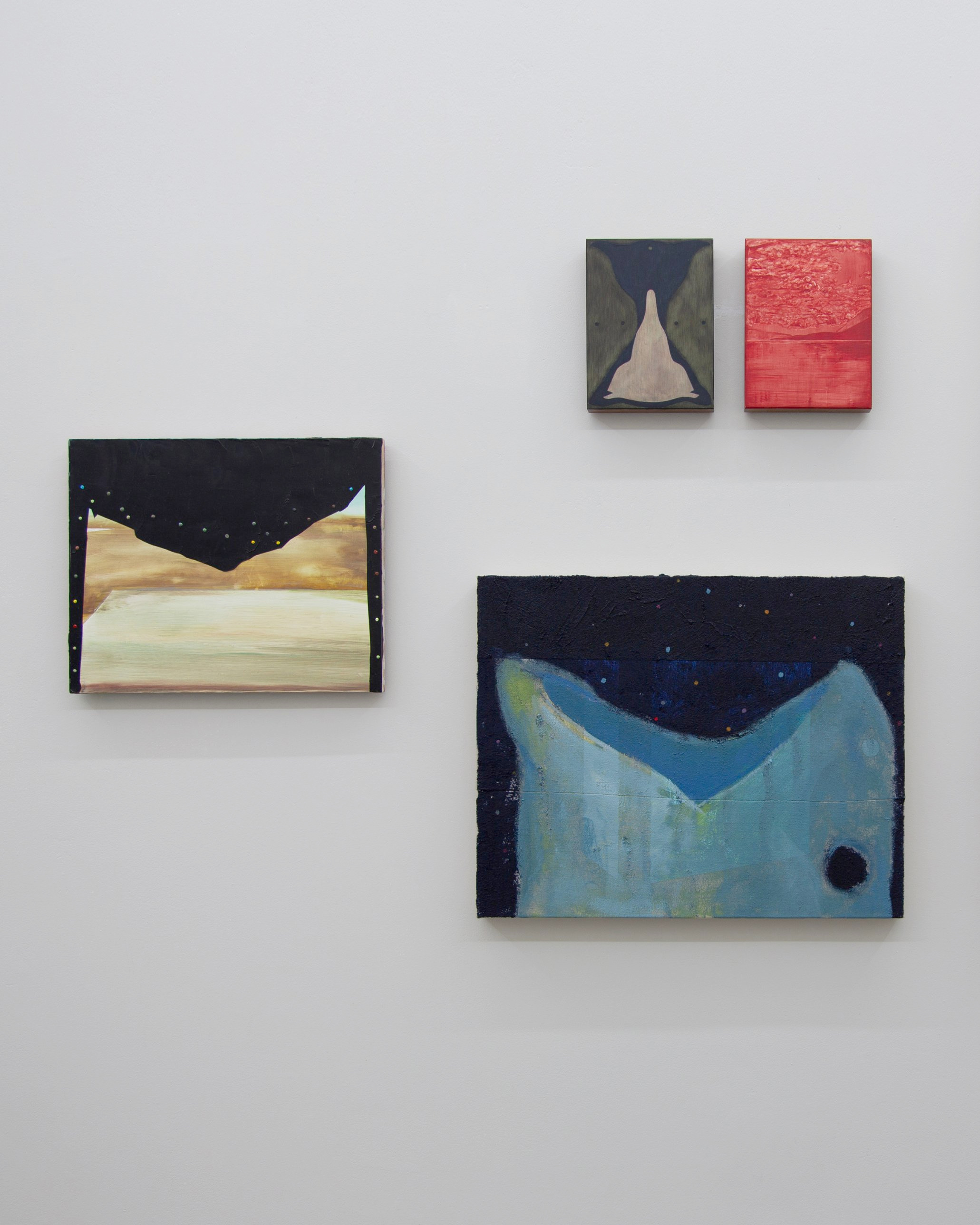
A black form like a torn curtain hangs across the top of a tawny ochre landscape, with a pale green-white field below. Small dots of colour are scattered along the black edges.
Untitled, 2019
30 × 37 cm · oil on board

Answered by In Transit and Portrait of Space (Jesse Ash & Lee Miller).
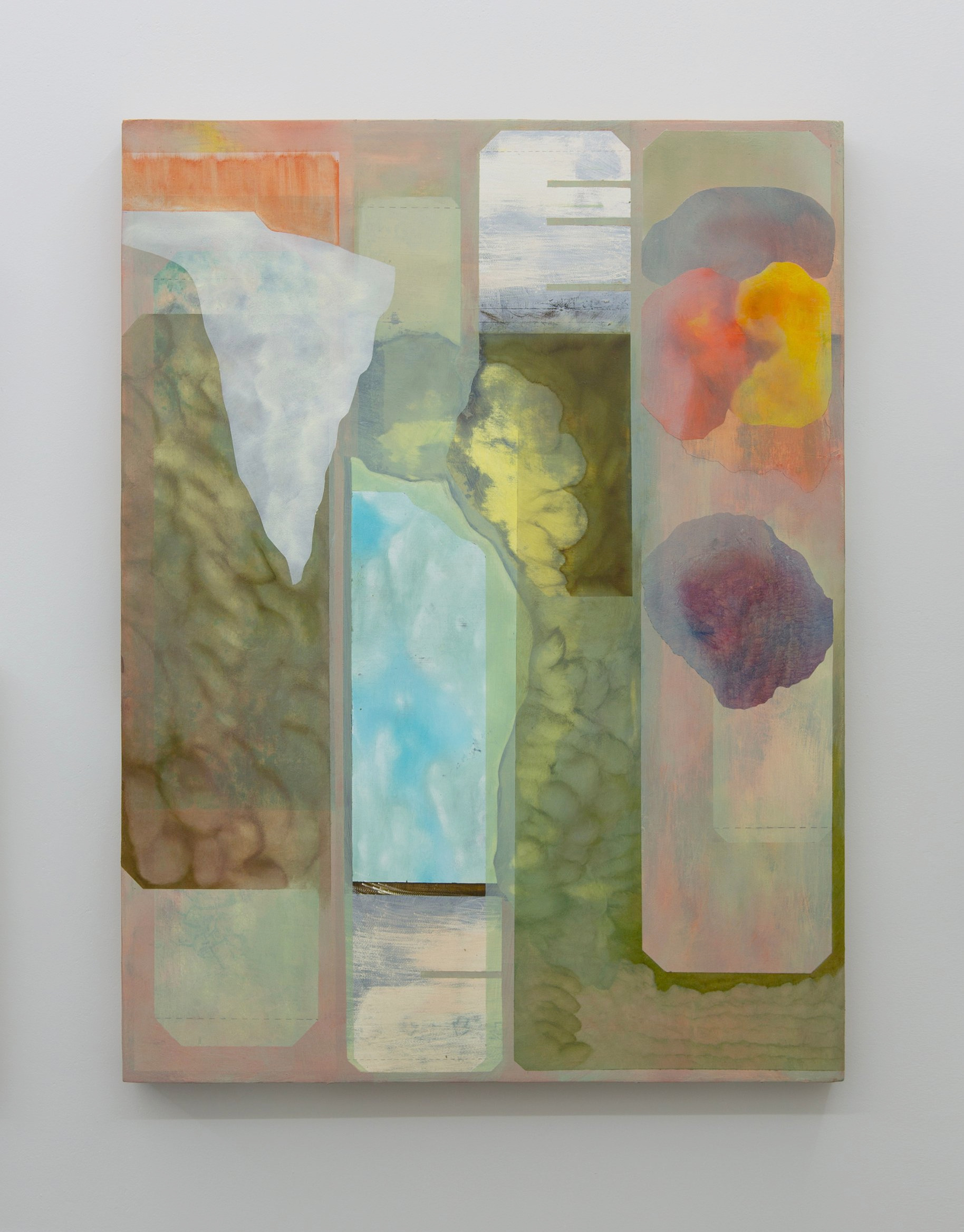
Vertical panels in soft greens, pinks and greys overlap like sheets of tracing paper. An orange band sits at the top left, a pale blue-white shape falls through the upper centre, and clusters of red, yellow and deep purple gather at the right.
A Play for View Finding, 2026
88 × 66 cm · oil on board

In response to Amber.
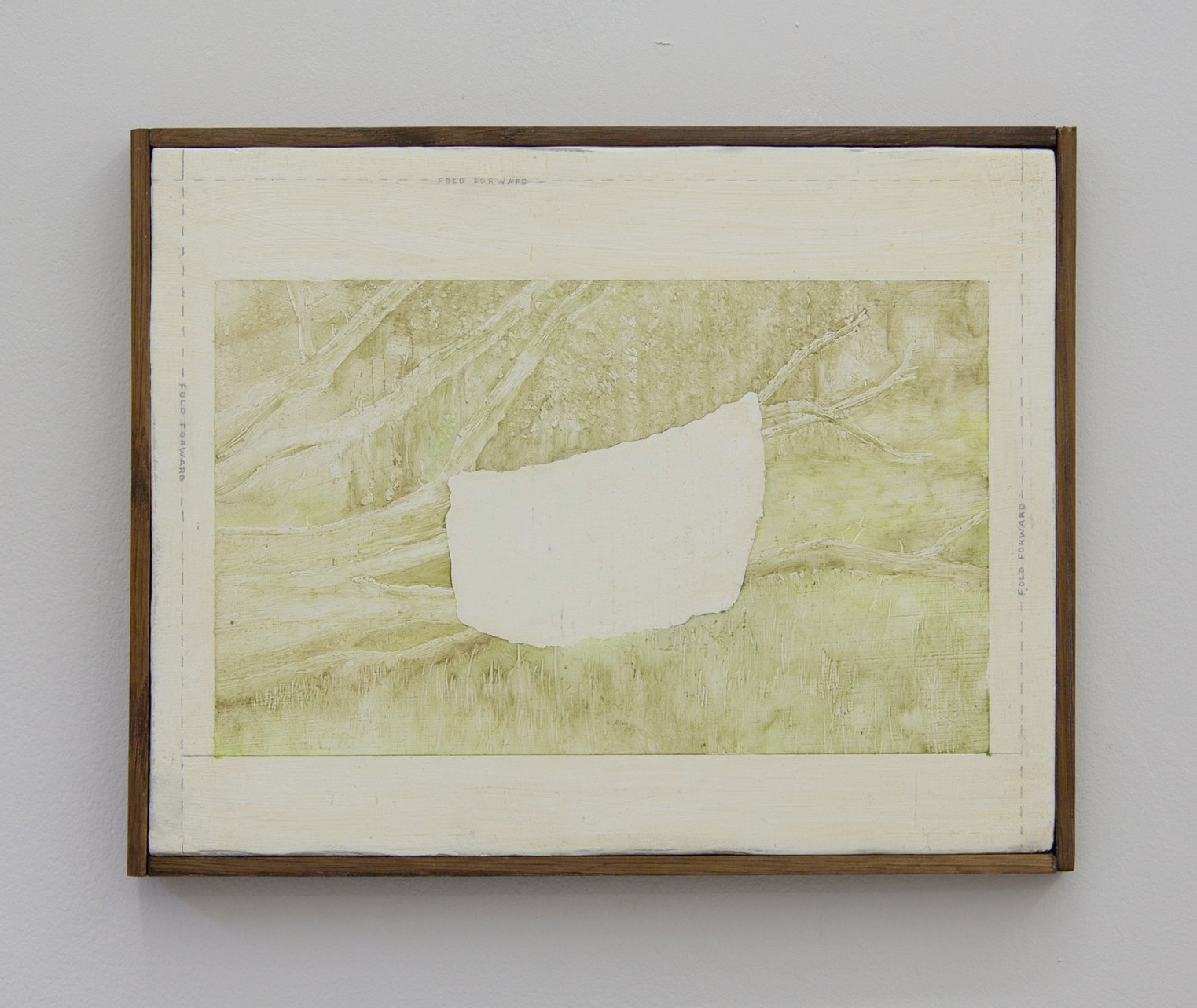
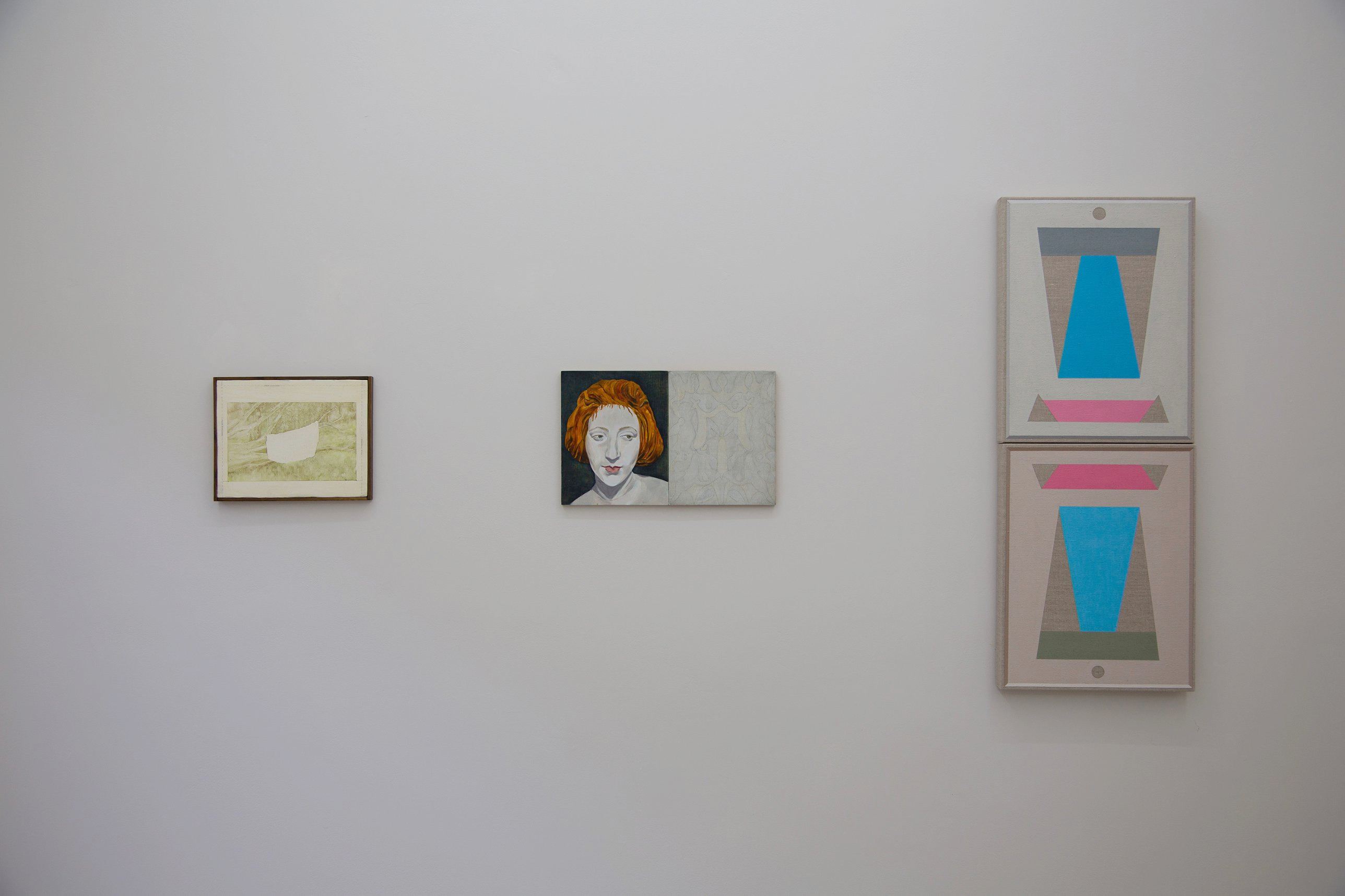
A pale olive-green scene of fallen branches and grass, interrupted at its centre by a blank cream shape. A painted white border carries the faint instruction “fold forward”; the whole sits in a dark wooden frame.
Display (screen), 2026
23 × 29 cm · oil on board

In response to Prosopopoeia (Dressler, Nina Resch).
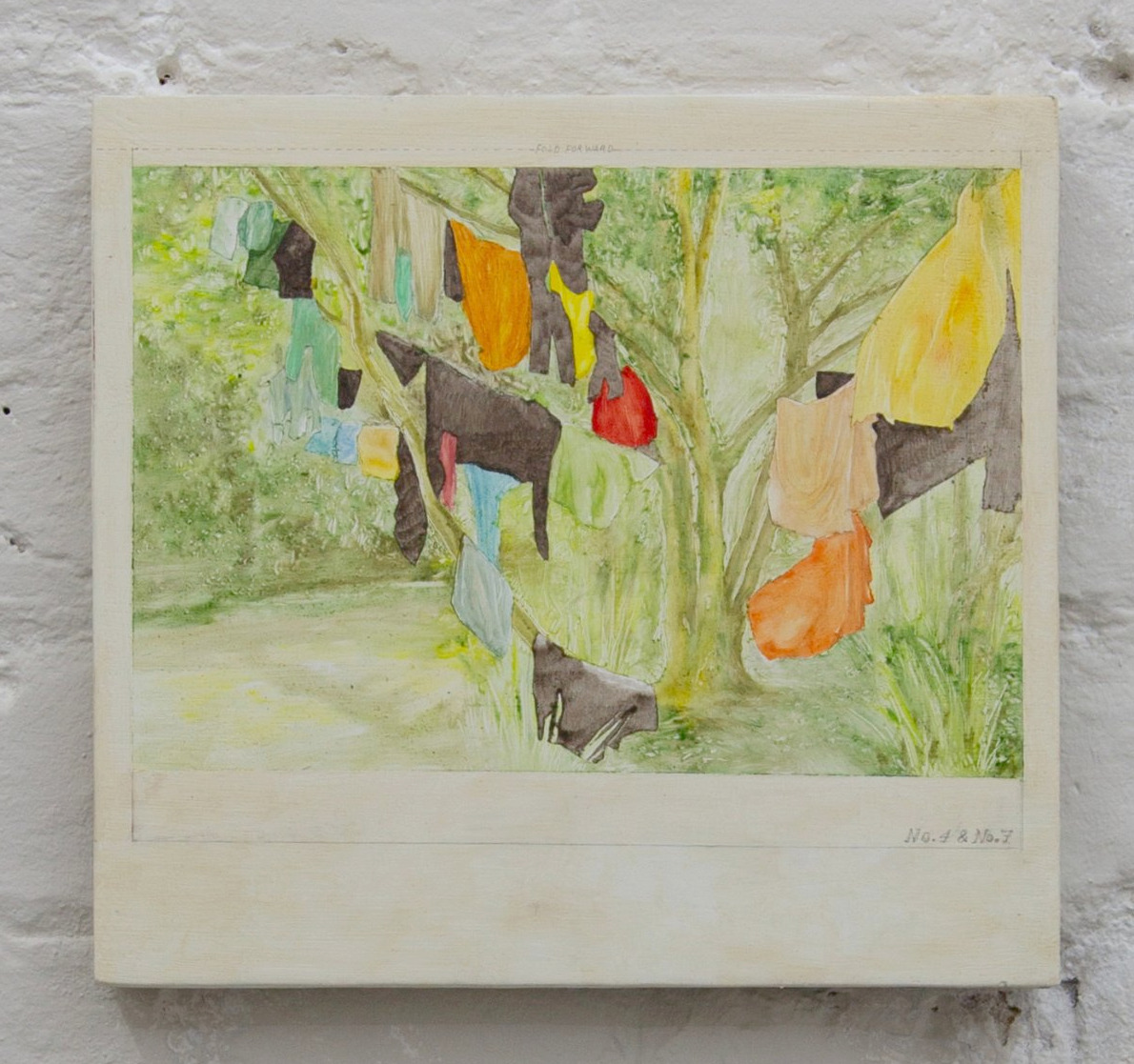
Painted in the form of a Polaroid, with a white border and a handwritten note at the lower right. Within it, cloths in orange, yellow, red, teal and dark brown hang from the branches of a tree in bright green foliage.
Display (dirty linen), 2026
25 × 27 cm · oil on board

Rebecca Fortnum
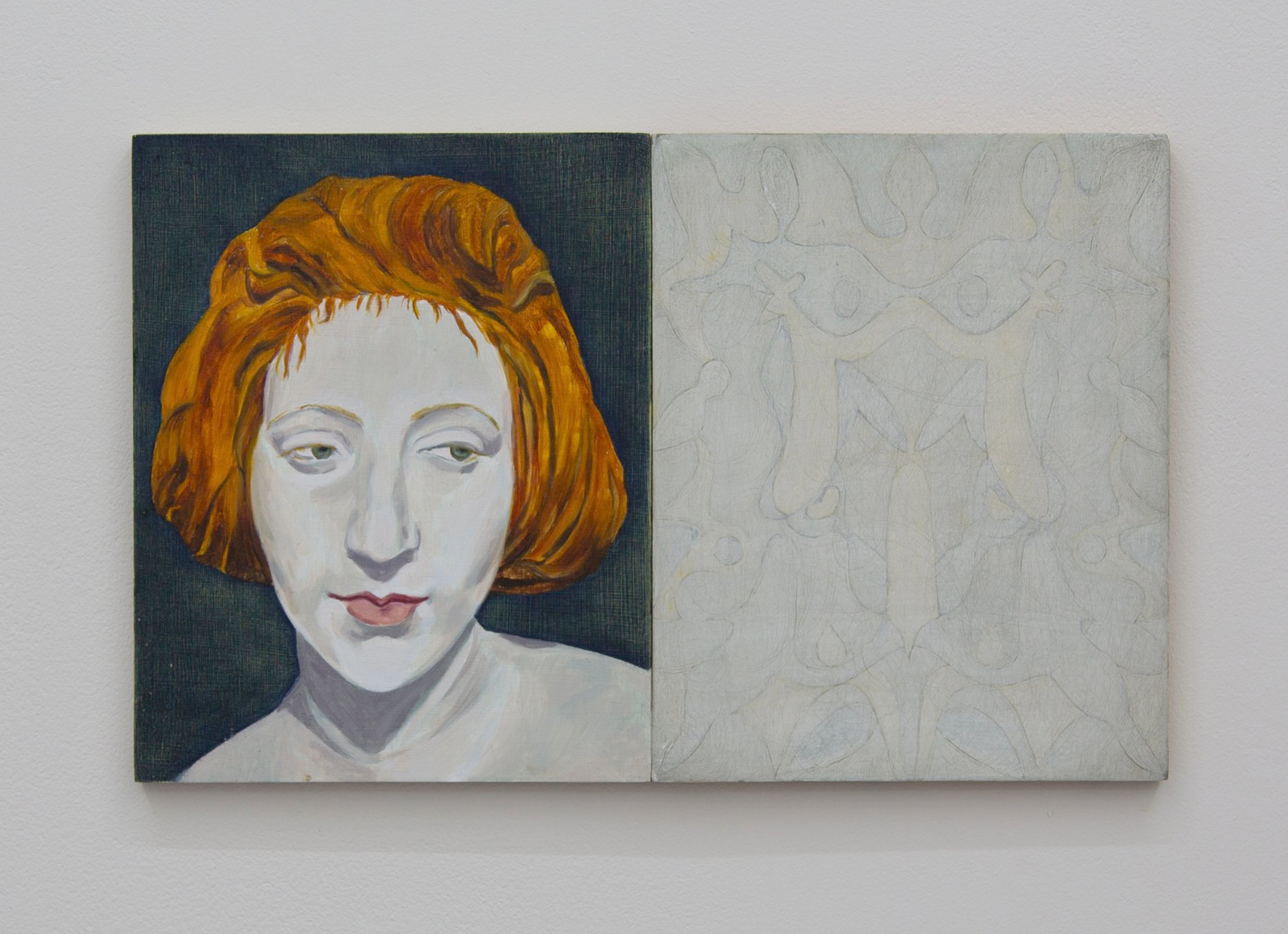
Two panels. At left, a head with copper-red hair and a pale, downcast face against deep green; at right, a grey panel faintly drawn with interlacing linear figures.
Prosopopoeia (Dressler, Nina Resch), 2019
25 × 20 cm each panel · oil on gesso panel

Answered by Sitter and Display (screen).
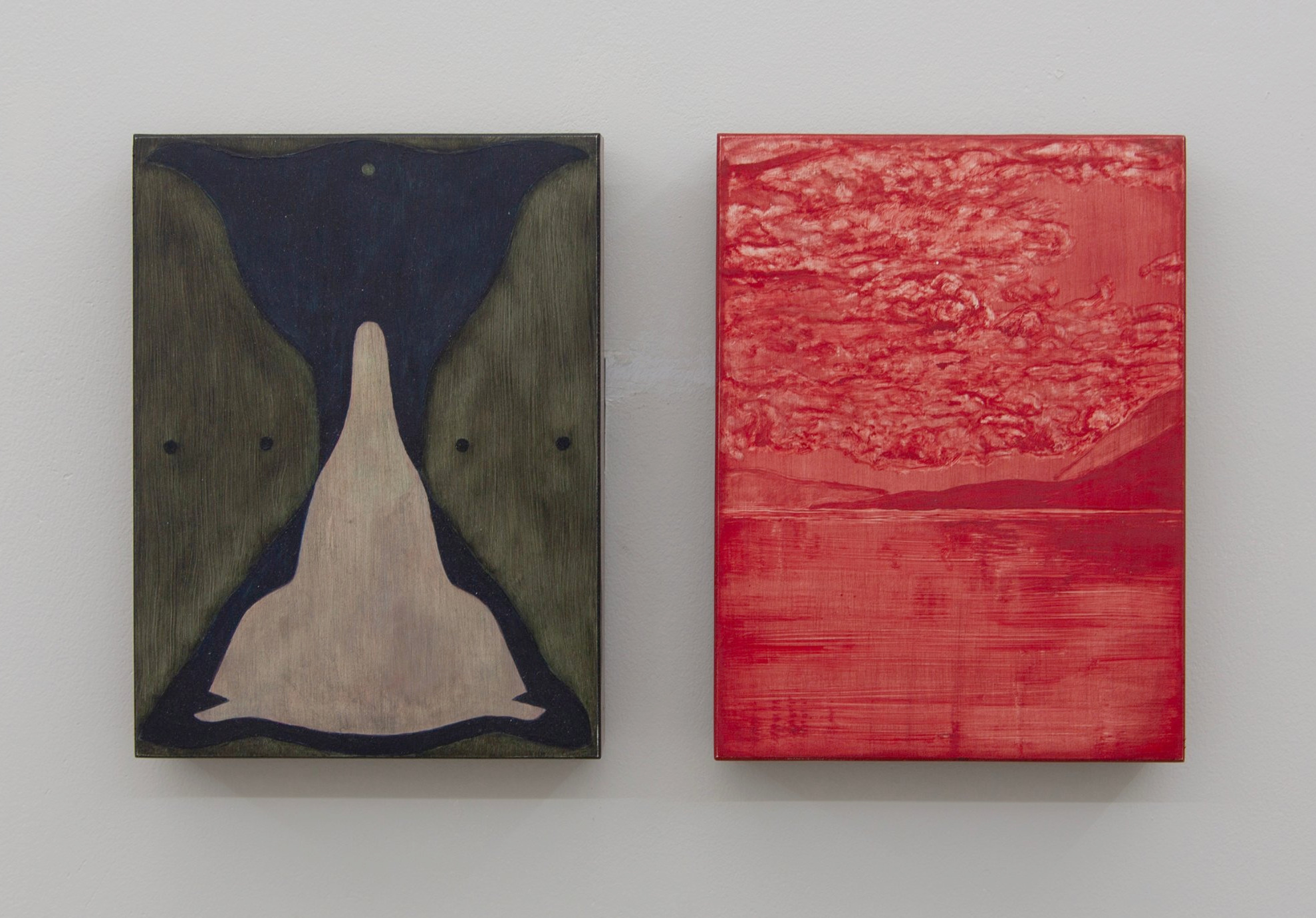
Two small panels. At left, a pale conical form opens through dark olive and deep navy; at right, an entirely red landscape of clouded sky above still water.
Portrait of Space (Jesse Ash & Lee Miller), 2026
20 × 15 cm each, 2 parts · oil on gesso panel

In response to Untitled.
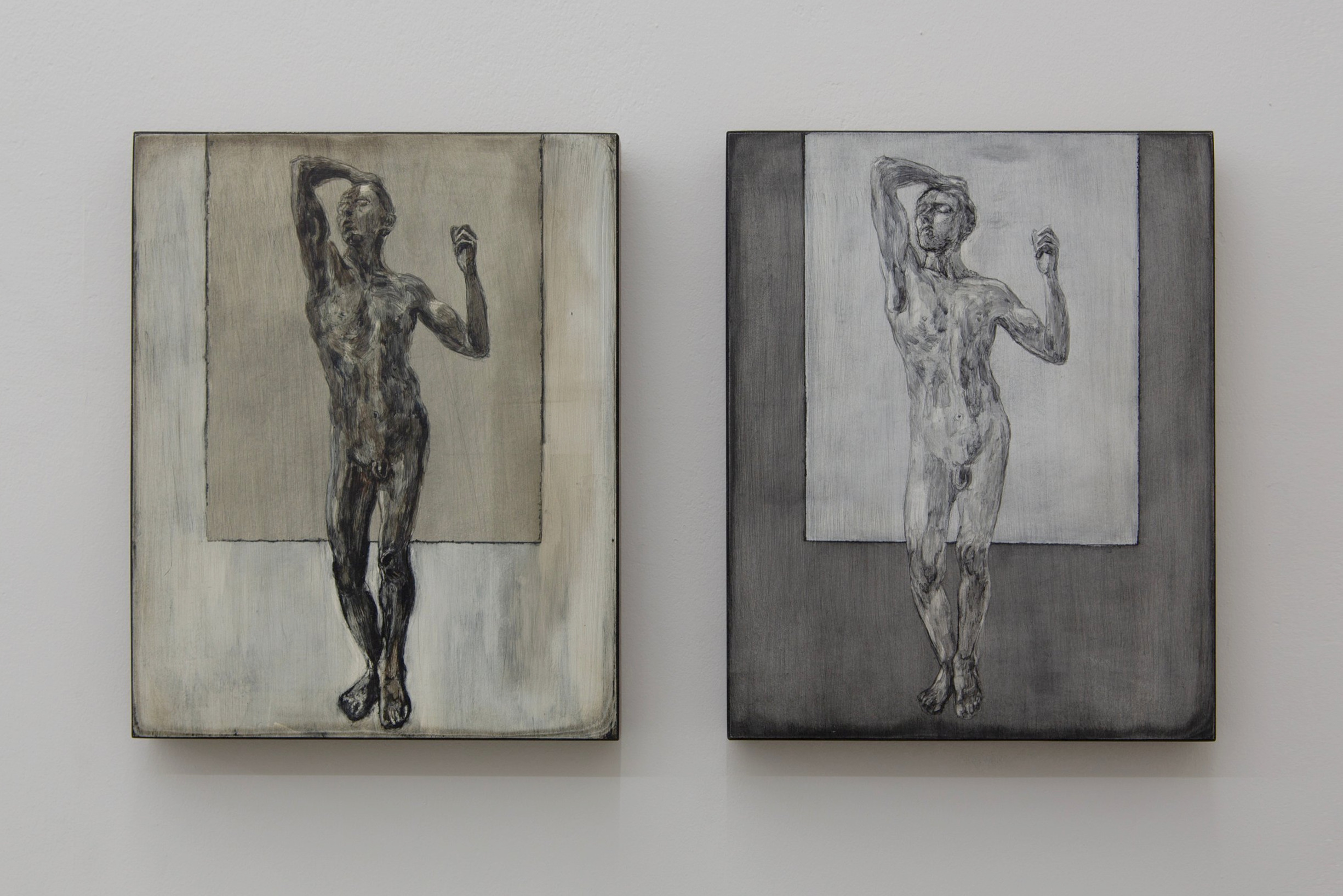
Two small panels in greys and black, each showing the same standing figure in front of a painted rectangular sheet: one against a warm pale ground, the other against dark grey.
Considering SJ’s schema (The Age of Bronze), 2026
25 × 20 cm each, 2 parts · oil on gesso panel

In response to Amber. Answered by The Age of Bronze.
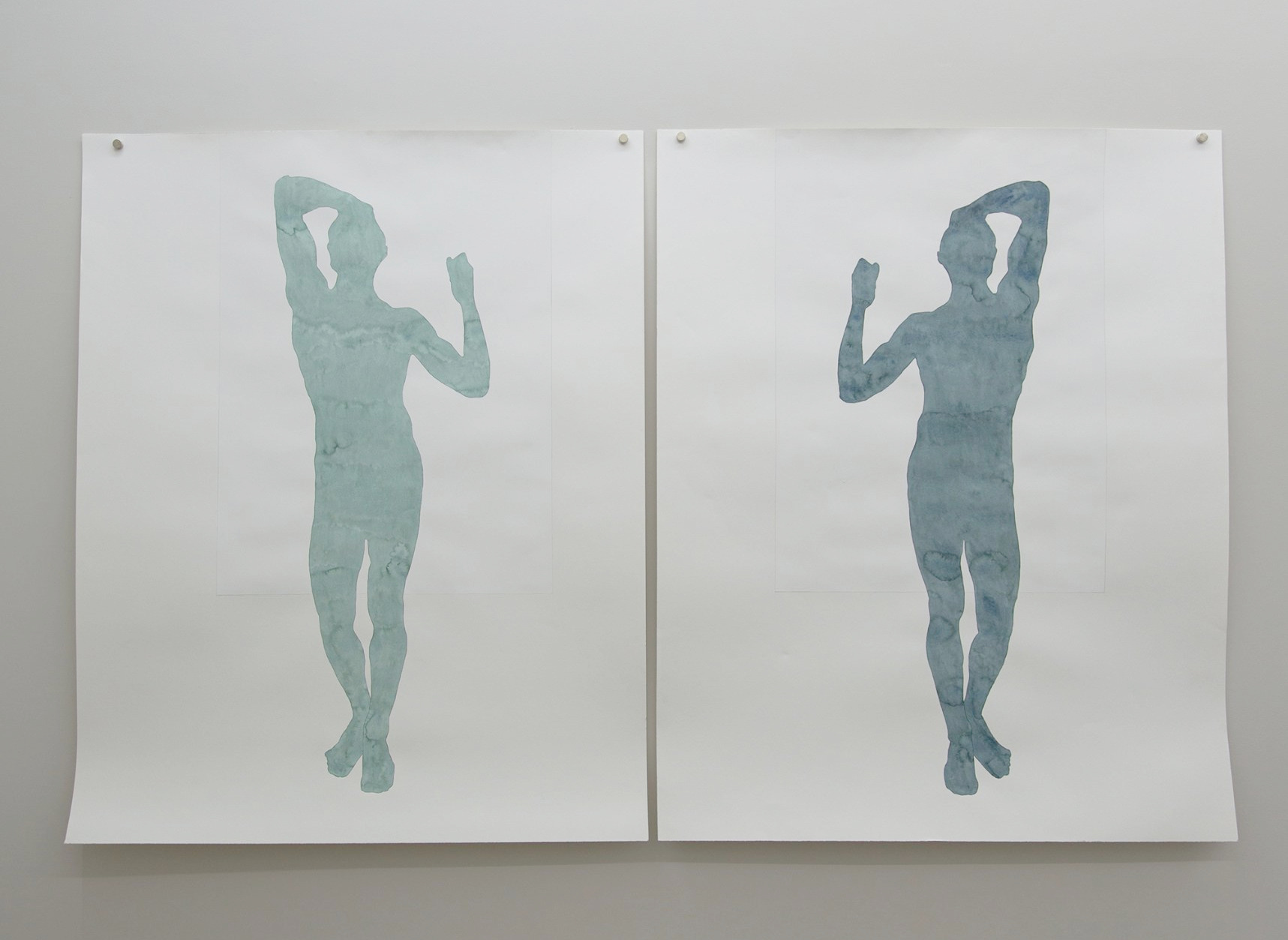
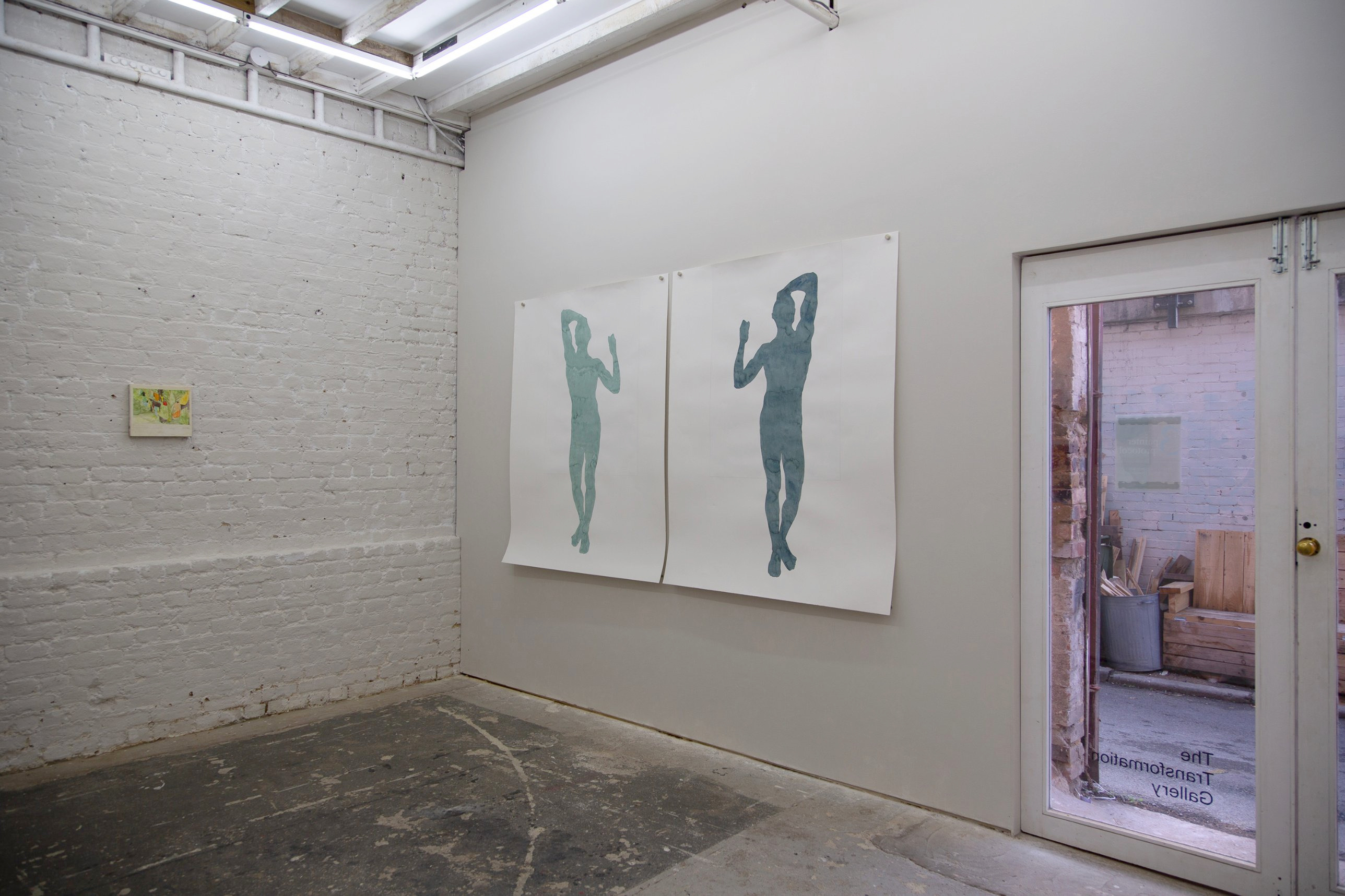
Two large sheets of paper pinned to the wall, each carrying a standing nude figure in washed blue-green — one paler, one deeper in tone — with one arm raised above the head and the other bent upward, after Rodin’s sculpture.
Untitled (The Age of Bronze ii), 2026
150 × 122 cm each, 2 parts · watercolour, gouache and pencil on paper

Seungjo Jeong
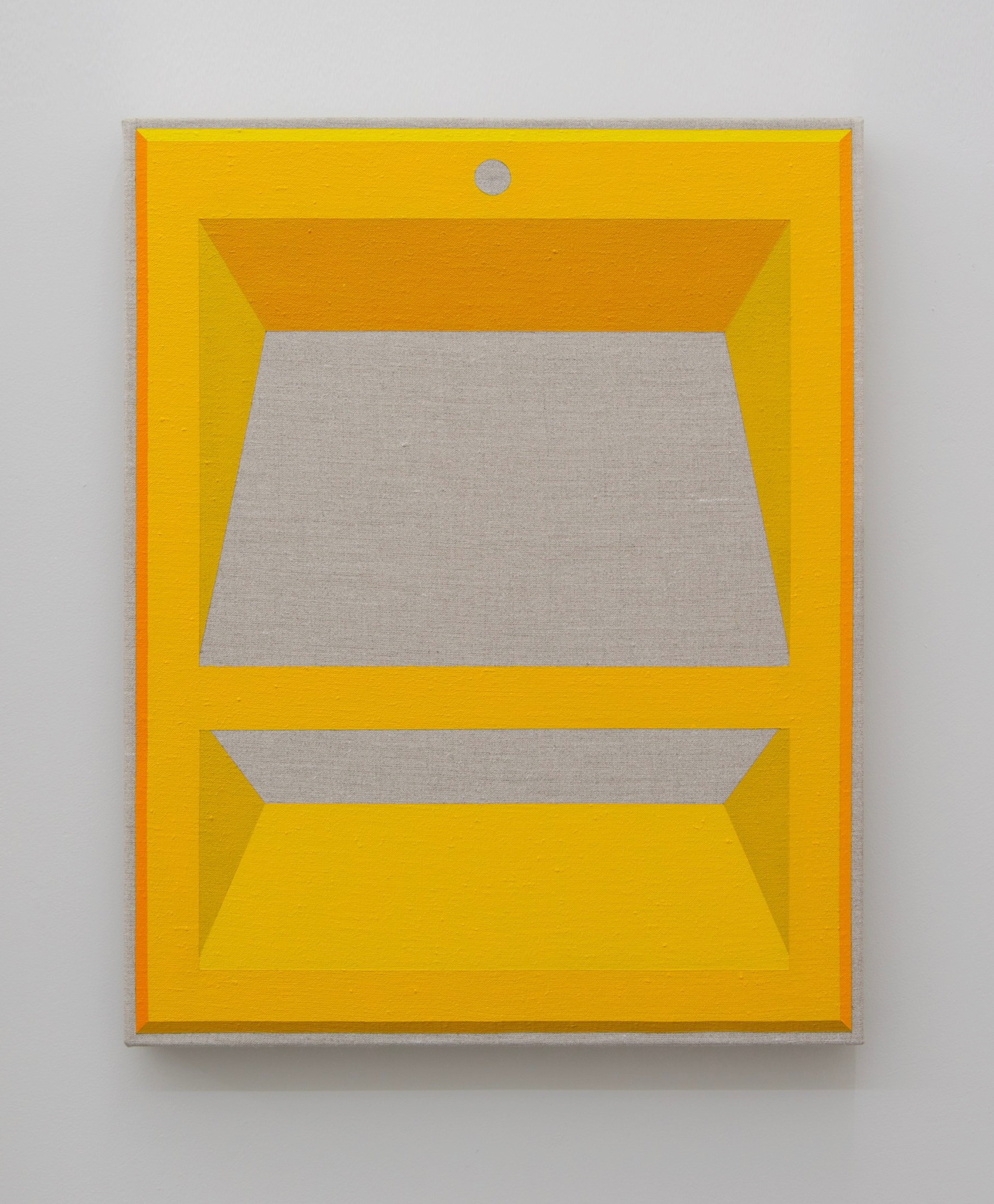
A yellow and orange border opens inward onto two trapezoids of bare linen — one deep, one shallow — with a small disc of linen left unpainted at the top. The weave of the support is visible wherever the paint stops.
Amber, 2022
50 × 40 cm · acrylic on linen

Answered by A Play for View Finding and Considering SJ’s schema (The Age of Bronze).
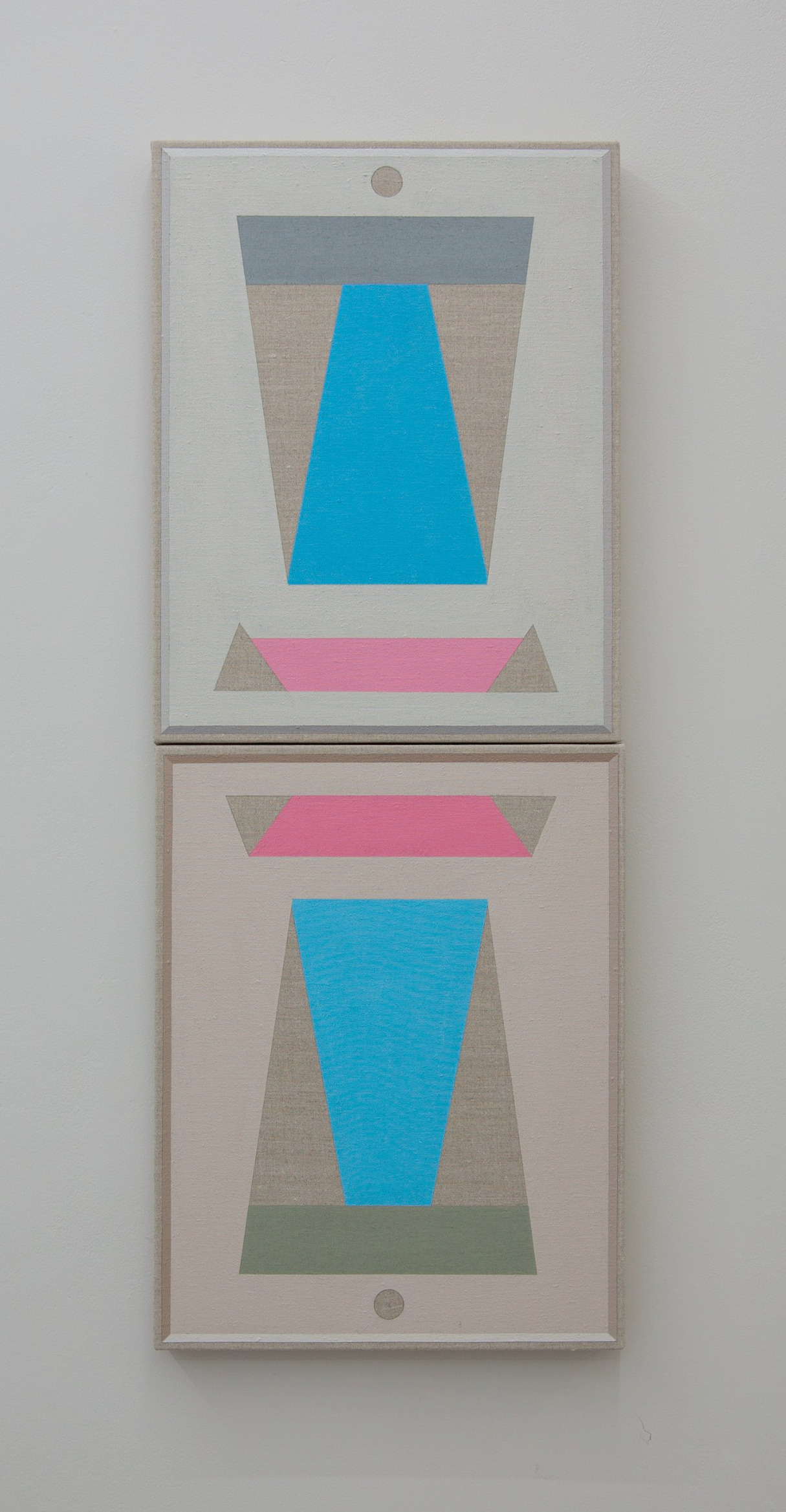
Two panels hung one above the other, each holding a blue trapezoid on bare linen between bands of pink, grey and green. The lower panel inverts the arrangement of the upper.
Sitter, 2026
45 × 35 cm each, 2 parts · acrylic on linen

In response to Prosopopoeia (Dressler, Nina Resch).
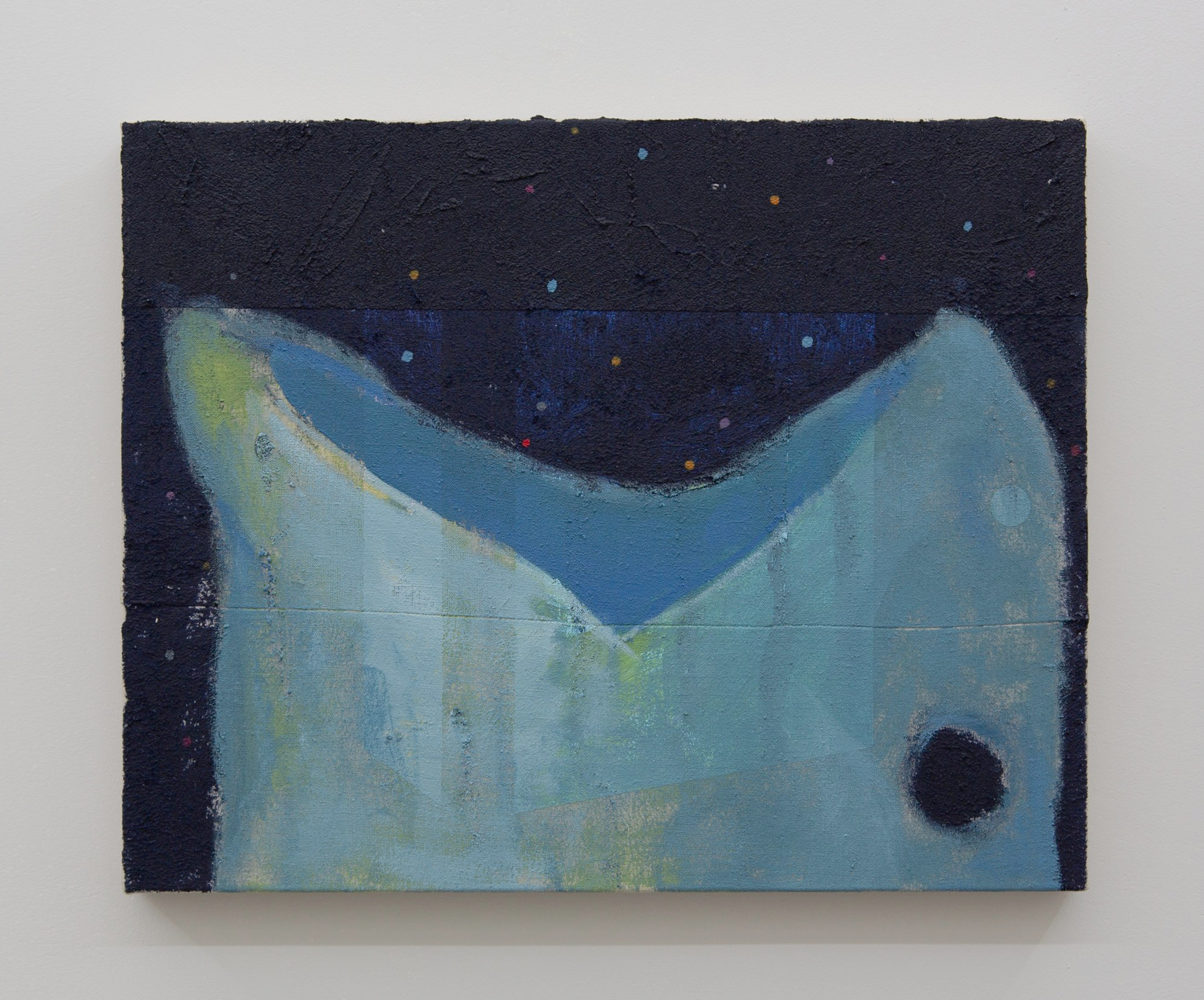
A pale blue-green form rises against a black, thickly worked ground scattered with small dots of colour, broken at the lower right by a dark circular void.
In Transit, 2026
40 × 50 cm · acrylic on linen

In response to Untitled.
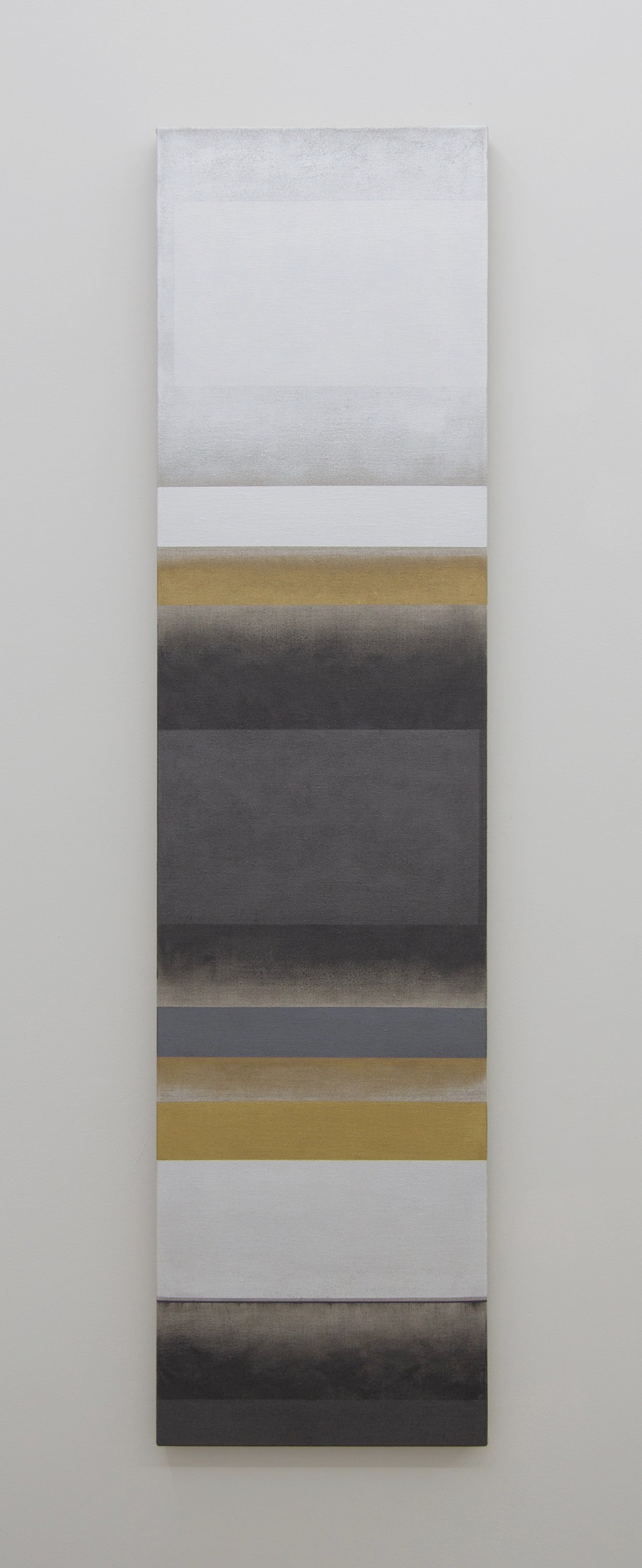
A tall narrow column of horizontal bands — white, ochre, charcoal, blue-grey — each softening into the next where they meet.
The Age of Bronze, 2026
160 × 40 cm · acrylic on linen

In response to Considering SJ’s schema (The Age of Bronze).

The exhibition

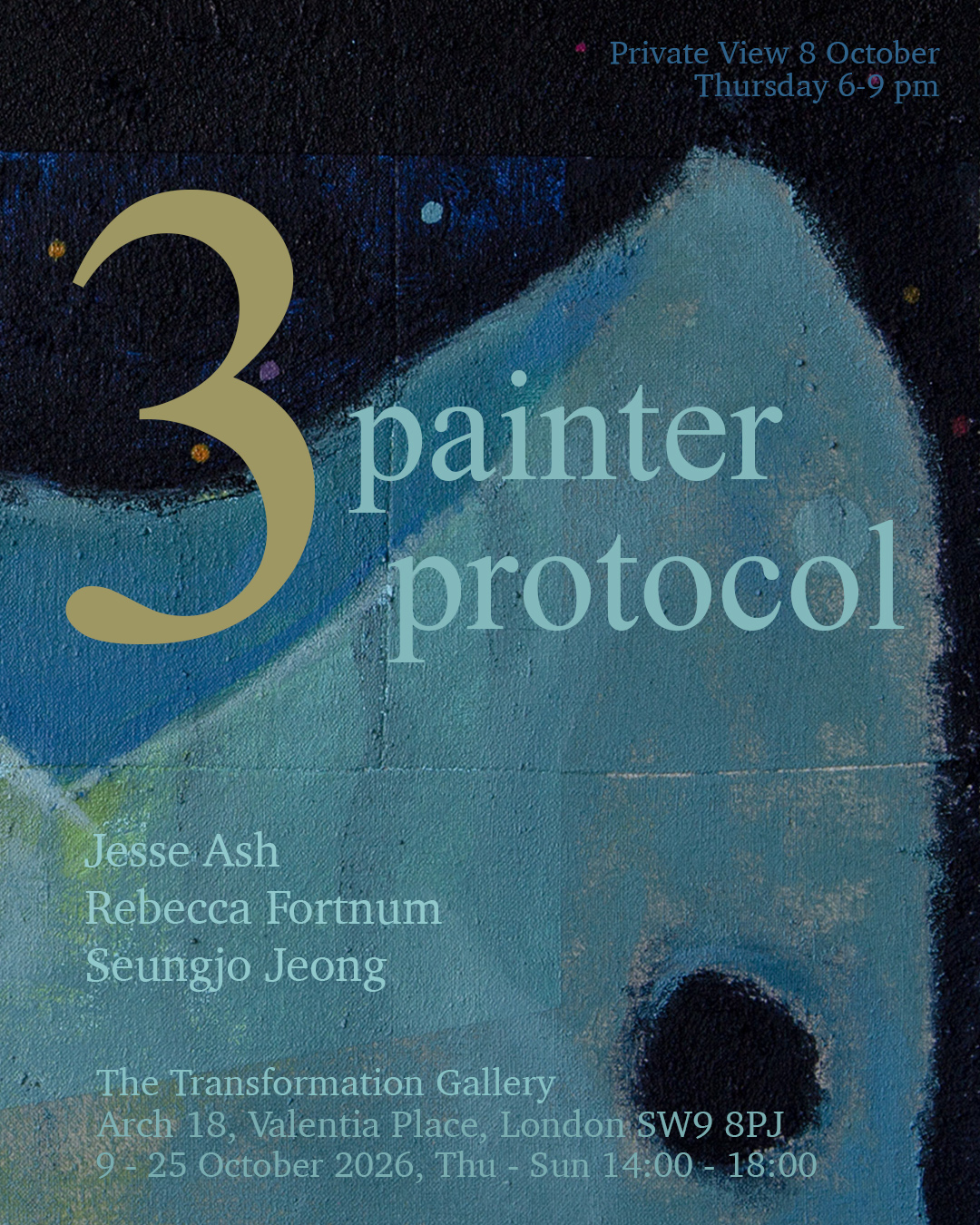
The Transformation Gallery, Arch 18 Valentia Place, London SW9 8PJ

8–25 October 2026 · Thursday to Sunday, 14:00–18:00

All twelve paintings were shown together: the three that began the project and the nine it produced.

The accompanying text, “Opening to the Unexpected: Nine Notes on a Protocol-Based Practice”, was written by Emma Cocker, writer-artist and Associate Professor in Fine Art at Nottingham Trent University. It is published on the gallery’s page for the exhibition.

The opening reception was held on Thursday 8 October 2026, 18:00–21:00.

Exhibition flyers

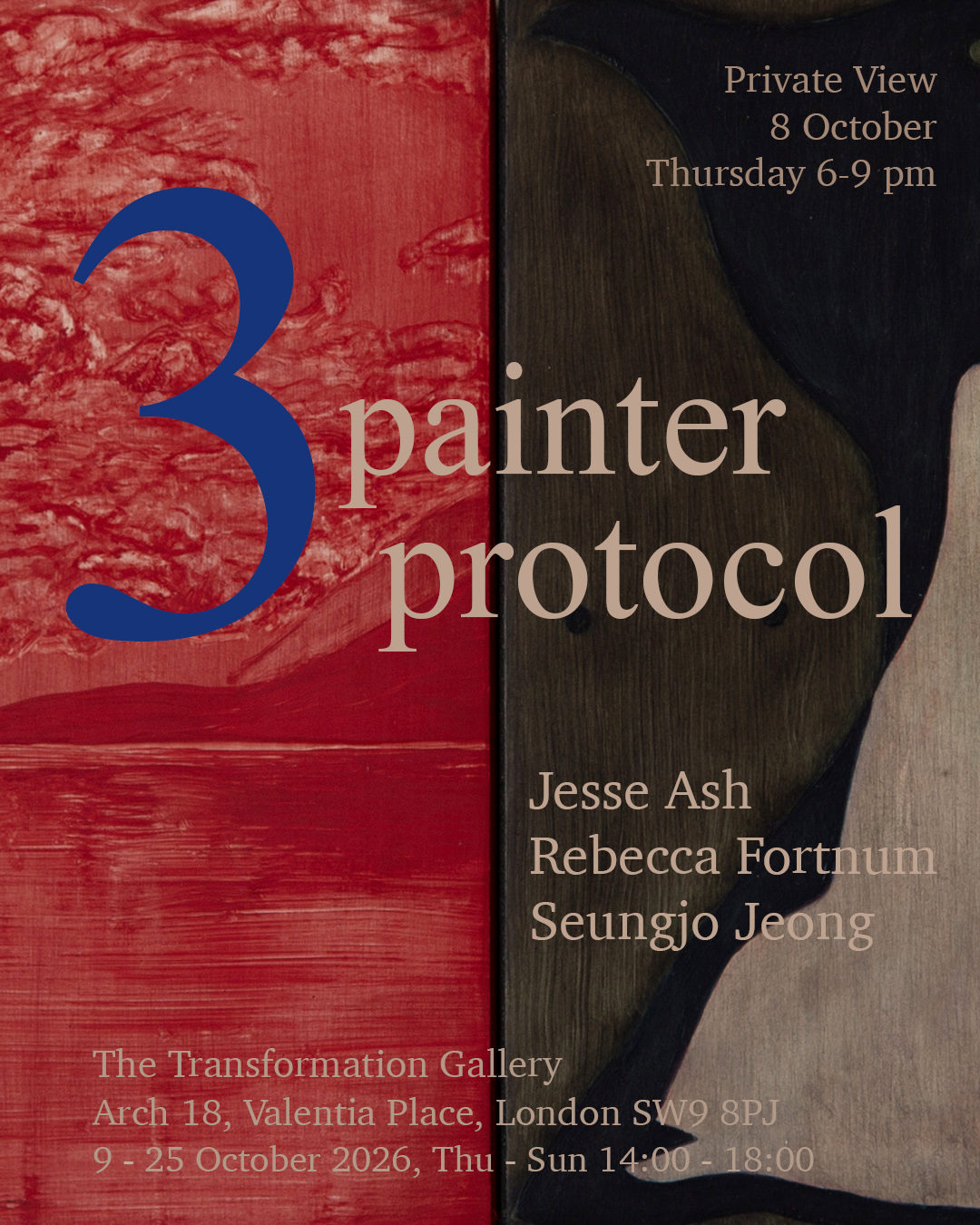
Three variations of the exhibition flyer were produced, each using a detail from one of the three painters’ work.
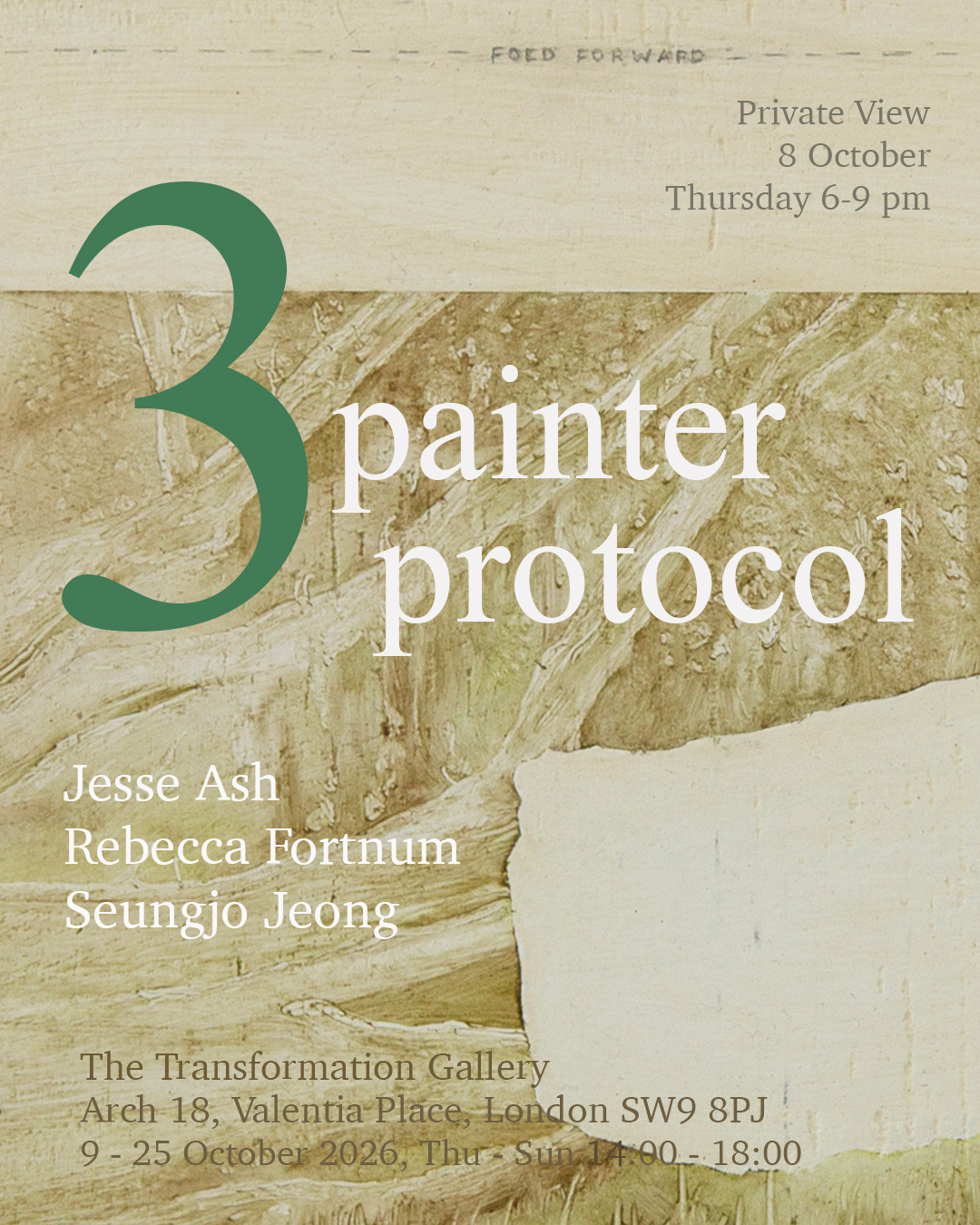
A detail of pale olive-green paint, fallen branches and a blank cream shape, with a faintly pencilled instruction along the top edge. The title is set across it in white, beside a green numeral 3.
Exhibition flyer, with a detail from Jesse Ash’s Display (screen).
Two panels side by side: an all-red landscape of clouded sky above still water at left, and a dark olive and navy form at right. The title is set in warm grey, beside a deep blue numeral 3.
Exhibition flyer, with a detail from Rebecca Fortnum’s Portrait of Space (Jesse Ash & Lee Miller).
A detail of deep blue and black paint scattered with small dots of colour and broken by a dark circular void. The title is set in pale blue, beside an olive numeral 3.
Exhibition flyer, with a detail from Seungjo Jeong’s In Transit.

Installation views

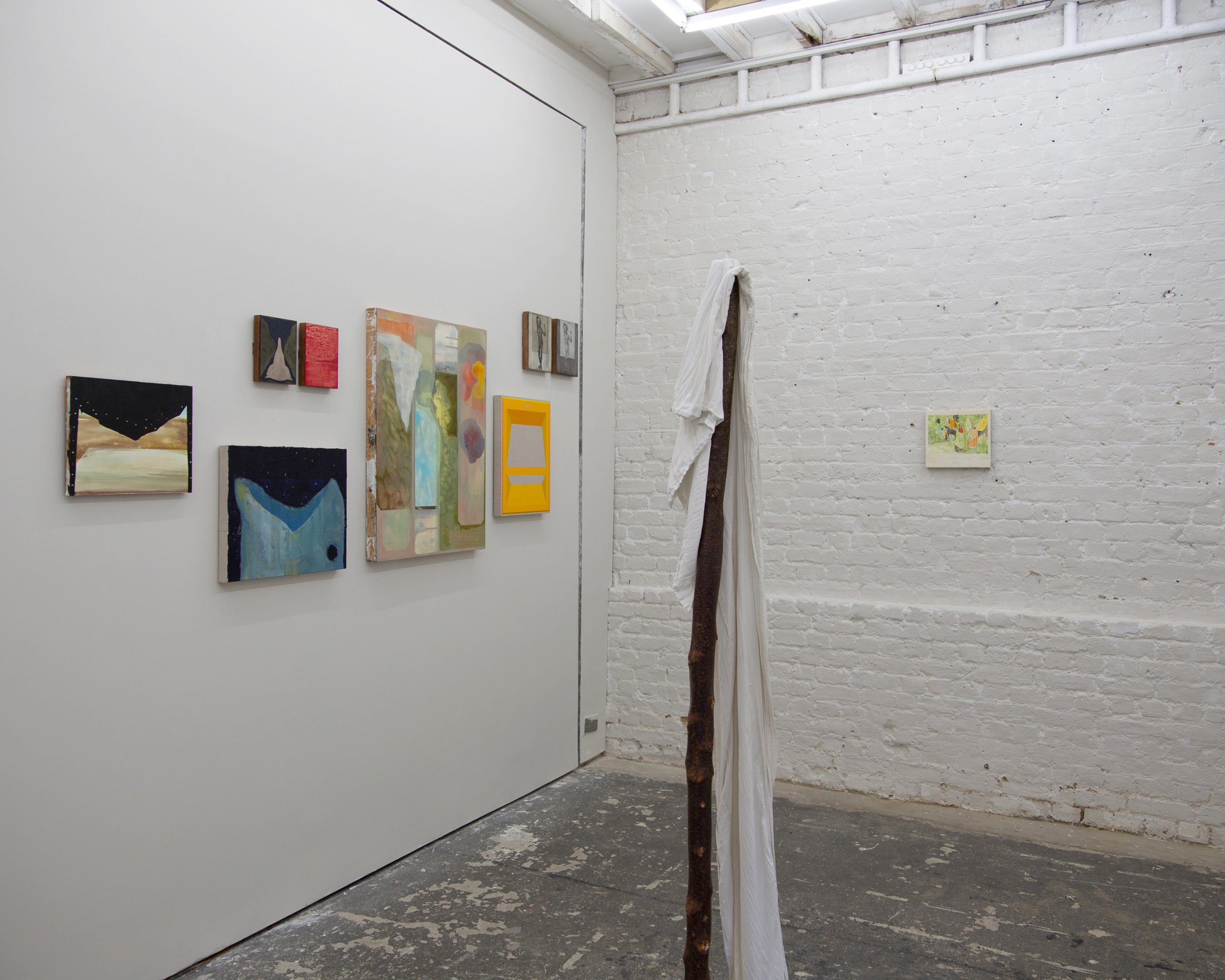
Looking across the gallery: a group of seven small paintings on the free-standing partition wall at left, a single small painting on the whitewashed brick wall beyond, and a draped cloth on a branch standing in the foreground.
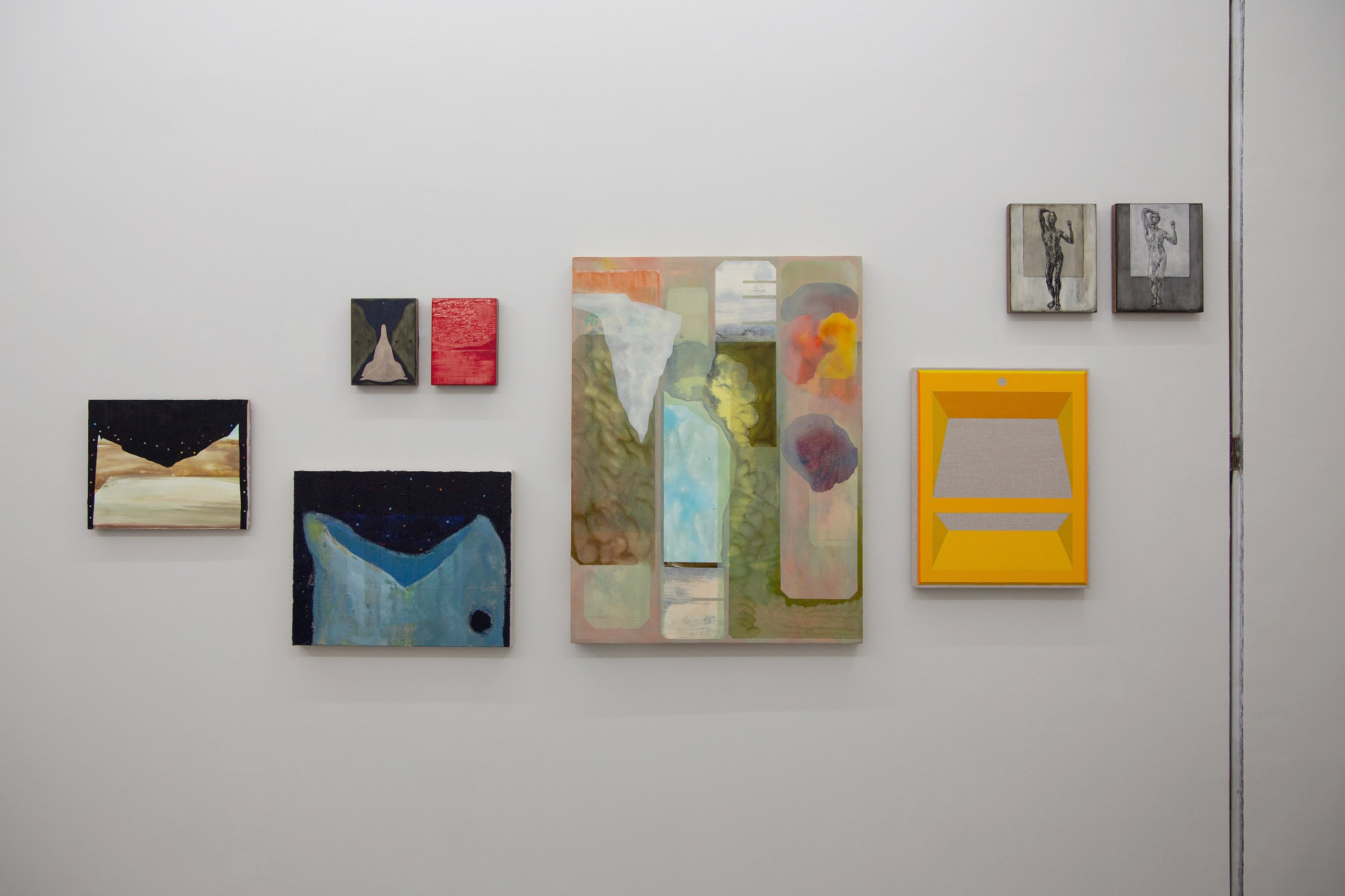
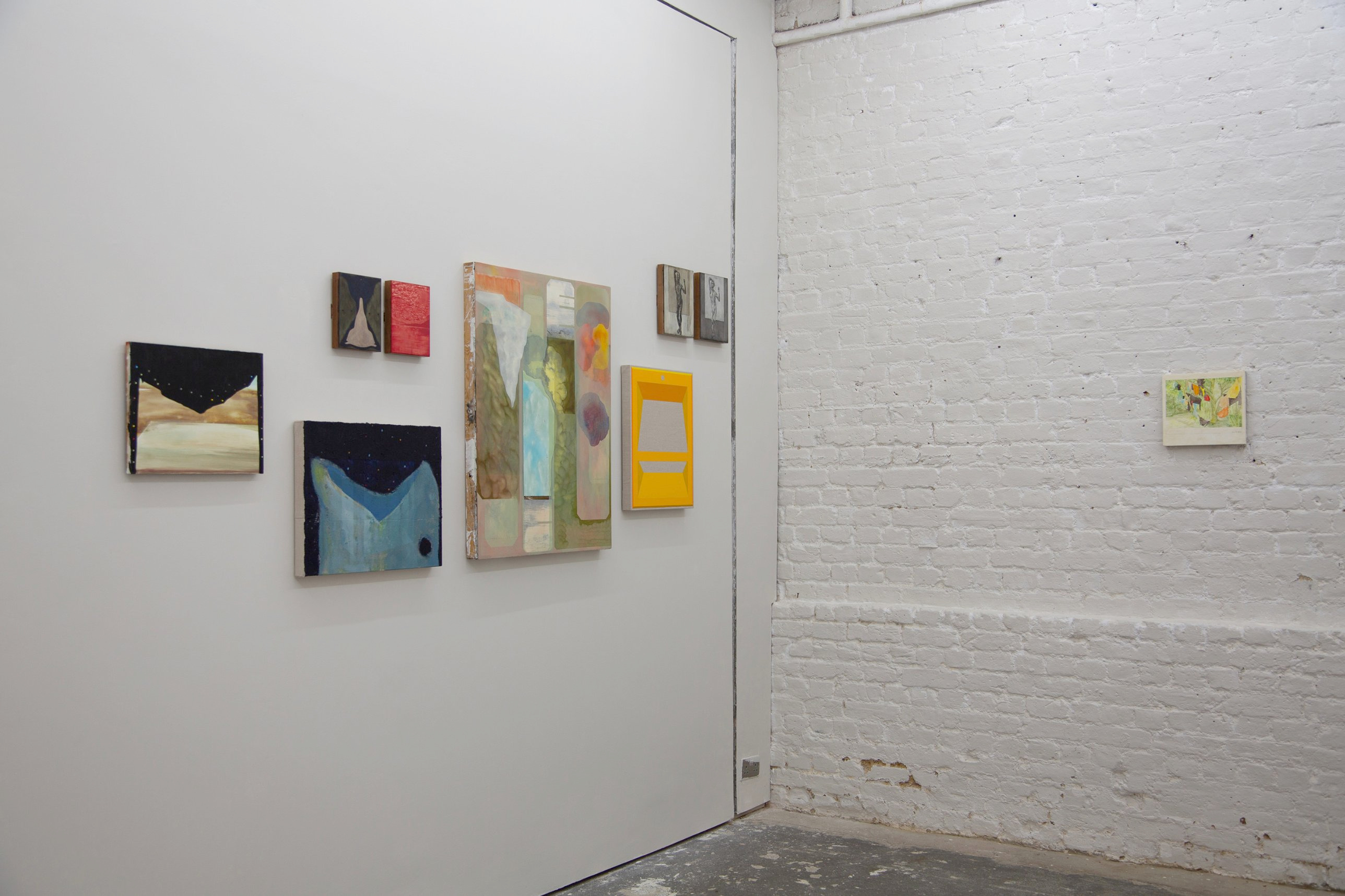
The partition wall hung with seven works: two landscape-format paintings at left, a pair of small panels above, a large soft-toned abstract at centre, an orange and grey geometric painting, and two small grisaille figure panels at upper right.
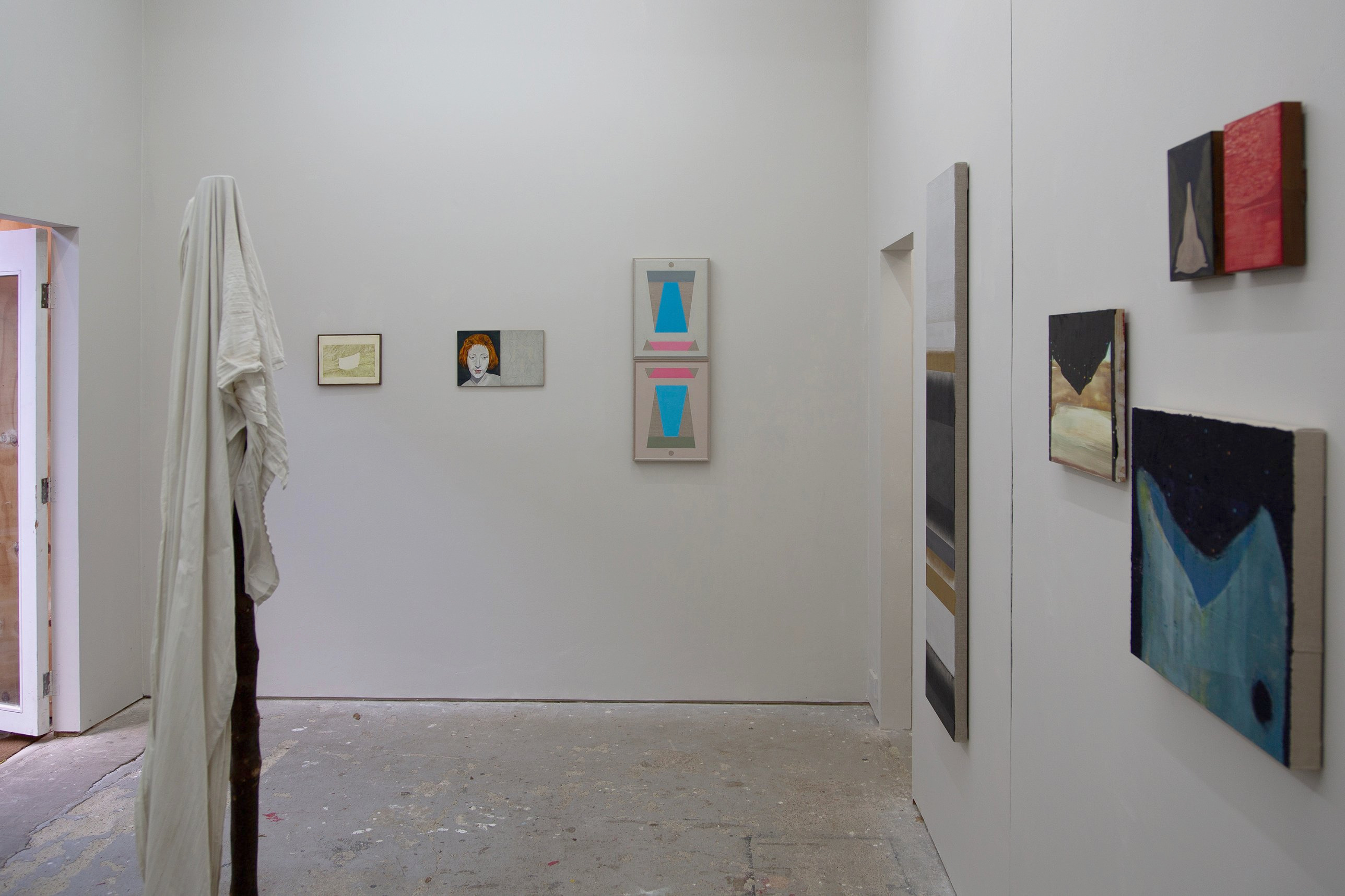
Across the corner of the gallery, with the draped cloth and branch at left, three works on the far wall, and the partition wall group seen edge-on at right.
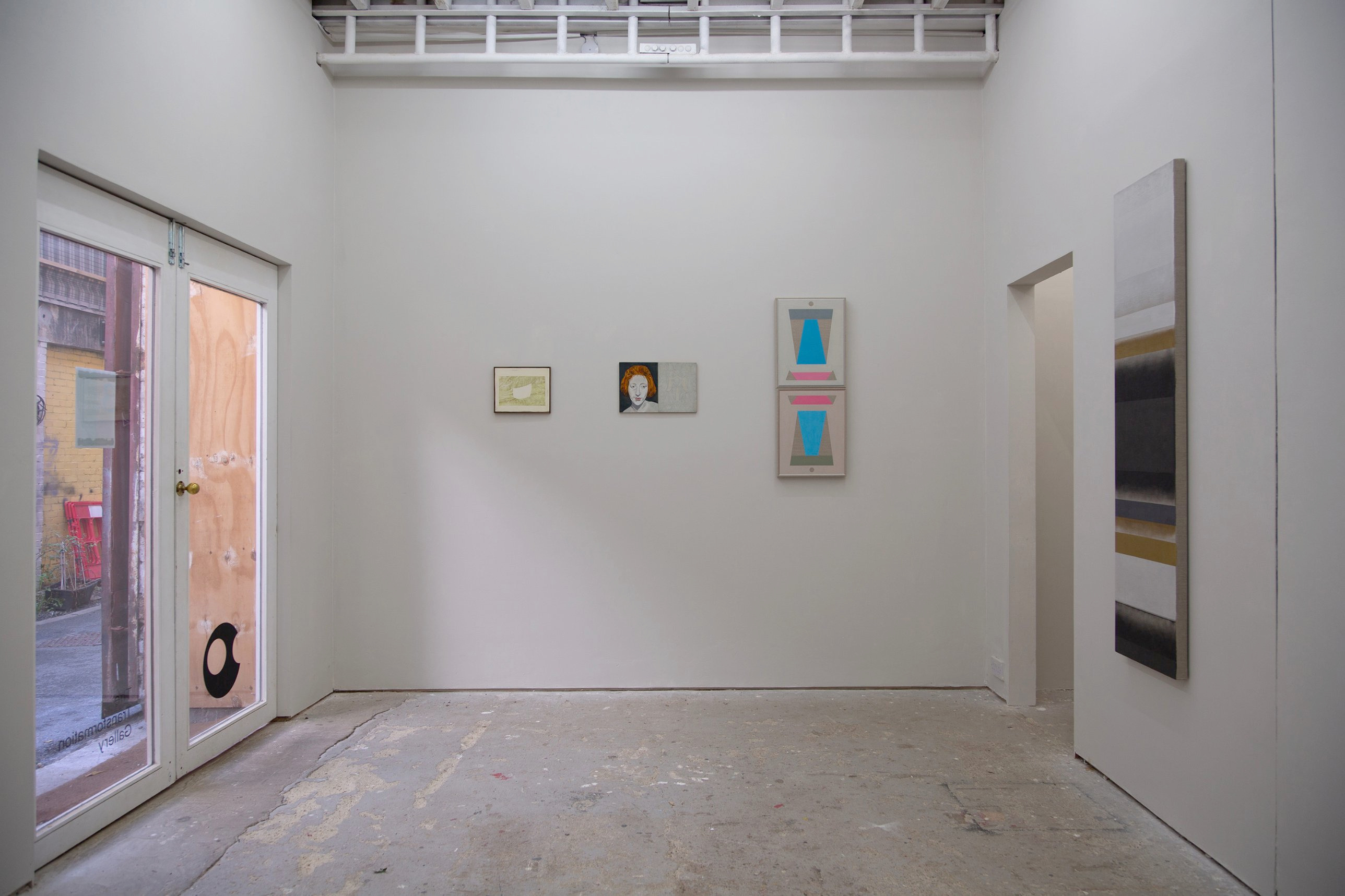
Three works on the far wall: a small framed work in pale green, a two-panel painting pairing a red-haired head with a pale drawn panel, and a vertically stacked pair of geometric panels in blue, pink and grey.
Four works hung as a group: a black and ochre landscape, a blue and black painting with a dark circular void, and two small panels above in dark green and red.
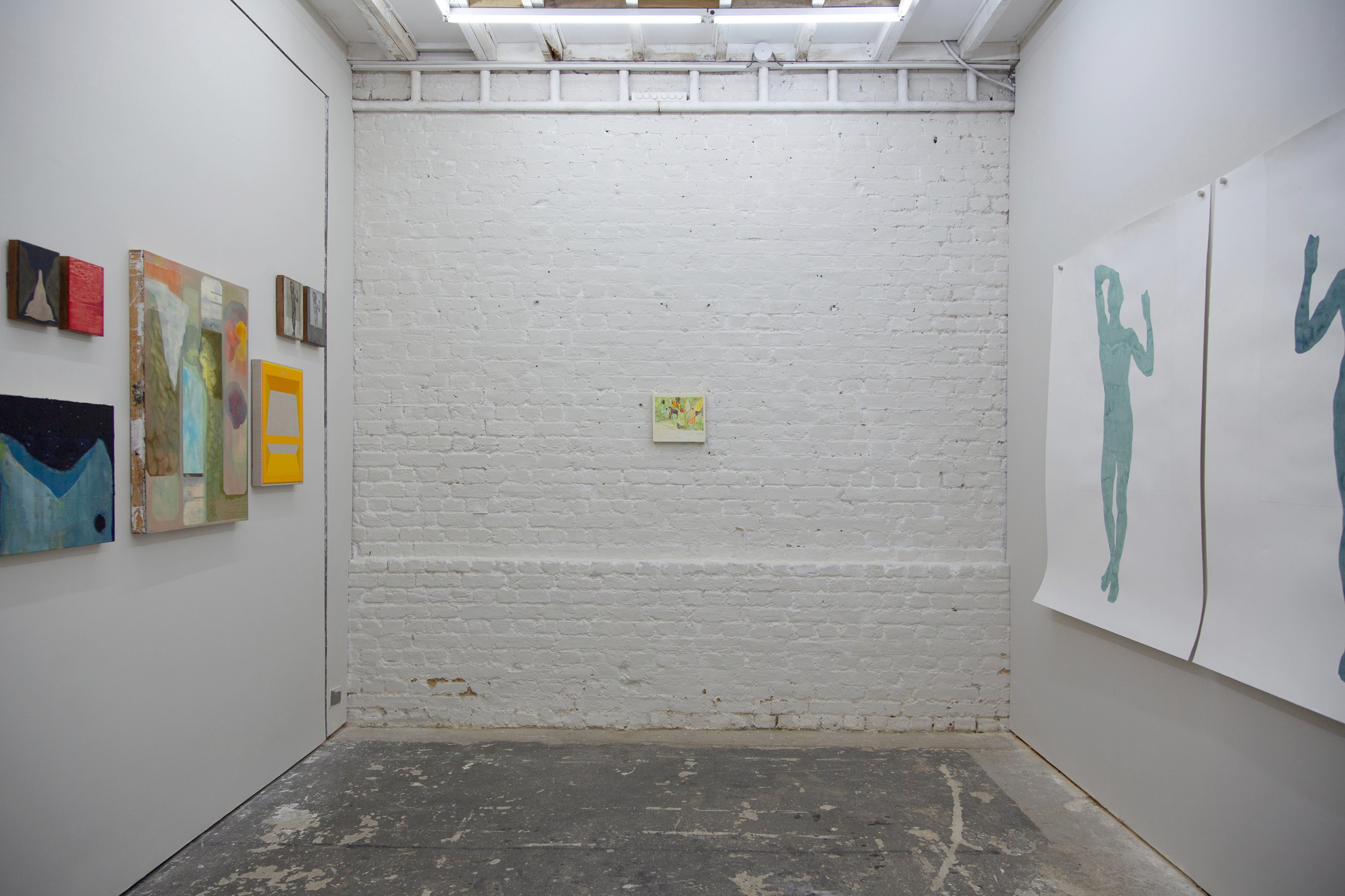
Down the length of the gallery, with the partition wall group at left, a single small painting centred on the whitewashed brick end wall, and two large works on paper showing blue-green figures at right.
Two large works on paper, each showing a standing blue-green figure, pinned to the wall beside the gallery entrance.
Across the corner, with the group of paintings on the partition wall at left and the small painting on the whitewashed brick wall at right.
From the entrance end of the gallery, with three works on the far wall and a tall striped vertical painting on the return wall at right.
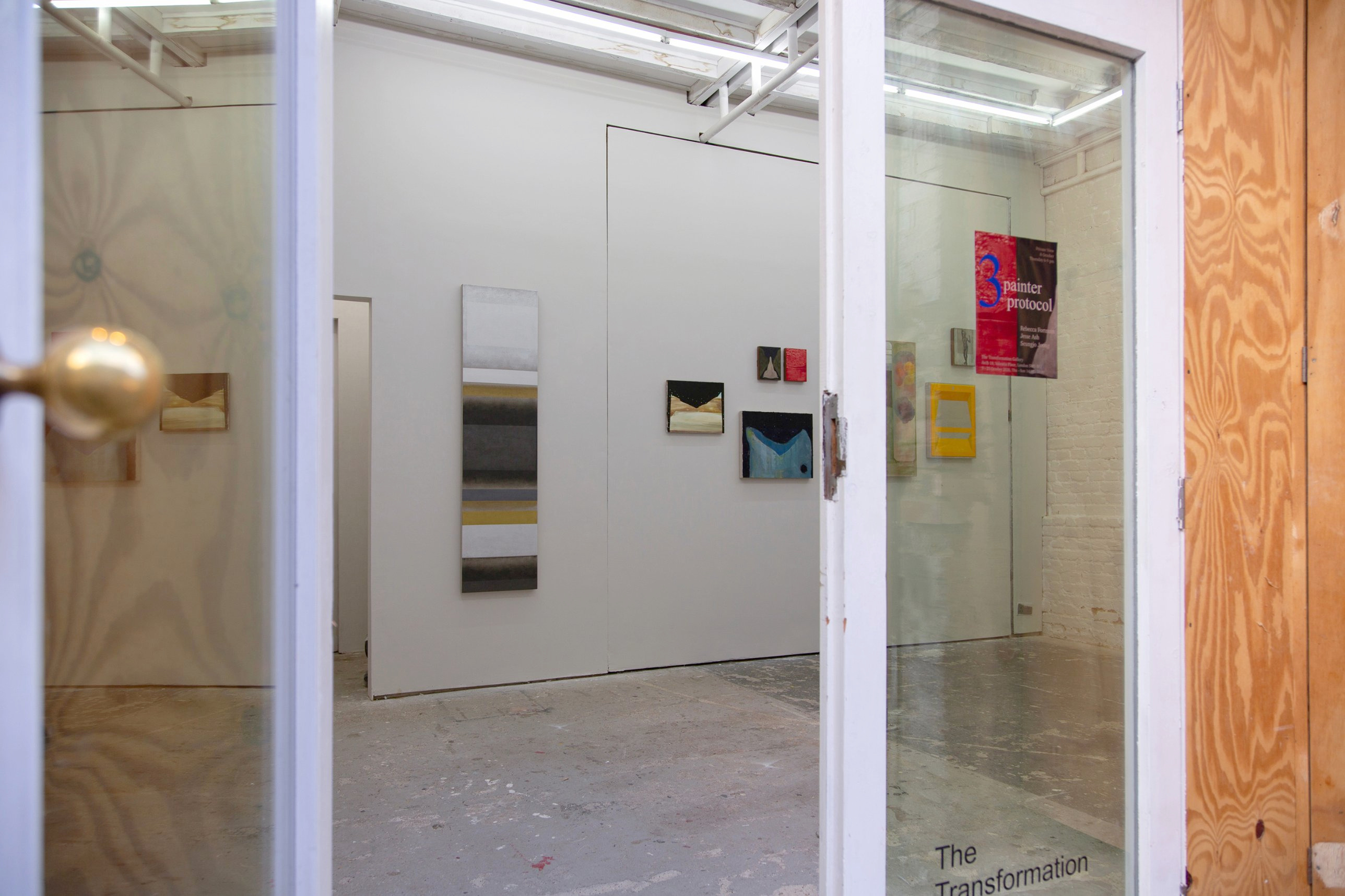
Seen through the glass doors of The Transformation Gallery, with the exhibition poster, the tall striped vertical painting, and the partition wall group visible inside.

Performance

There was a performance led by Jesse Ash on the opening night.

Exhibition walkthrough

youtube.com/shorts/Y1Y0AhfnQSg